
SB 9 INTELLIGENCE
Unlock Your Property's Wealth
California Senate Bill 9 eliminates historical zoning barriers, empowering single-family homeowners to subdivide their parcel and build up to four income-generating residential units. Transform dormant backyard square footage into generational financial security.
Zero impact to existing mortgage · California compliant
STANDARDIZED BLUEPRINT TIMELINE
The SB 9
Split Process
California Senate Bill 9 eliminates discretionary city hearings, establishing an objective path to subdivide single-family lots into two legal, developable parcels.
01
Apply & Map
Submit a tentative parcel map conforming to objective local zoning criteria, splitting your single parcel into two separate lots of at least 1,200 sq. ft. each.
02
Approve
City planning performs a ministerial review without CEQA delays or neighbor appeals, approving the legal parcel map within statutory 60-day review cycles.
03
Build & Record
Record new individual deeds with the county recorder, unlocking immediate rights to construct up to two residential units per parcel or monetize the vacant lot.
STRATEGIC VALUE CREATION
Dual Benefits of
ADU Additions
Unlocking surplus residential land transforms static property equity into enduring family utility and consistent annual cash flow.
PILLAR 01: CASH FLOW EXPANSION
Predictable Passive Rental Income
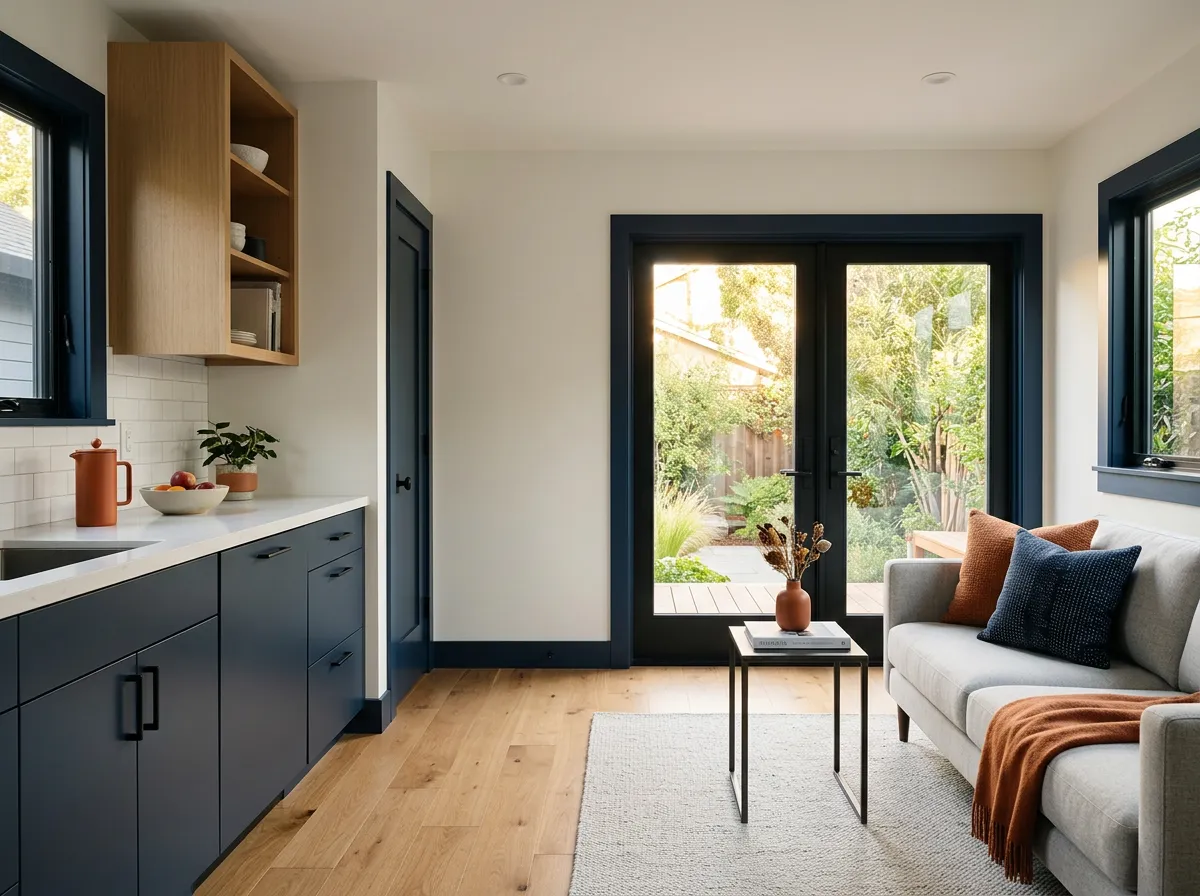
Constructing an accessory dwelling unit on your newly partitioned parcel creates a high-yield residential asset. In high-demand California metros, detached modern ADUs deliver consistent monthly yields while offsetting primary mortgage debt.
PILLAR 02: FAMILY INDEPENDENCE
Multi-Generational Living Flexibility
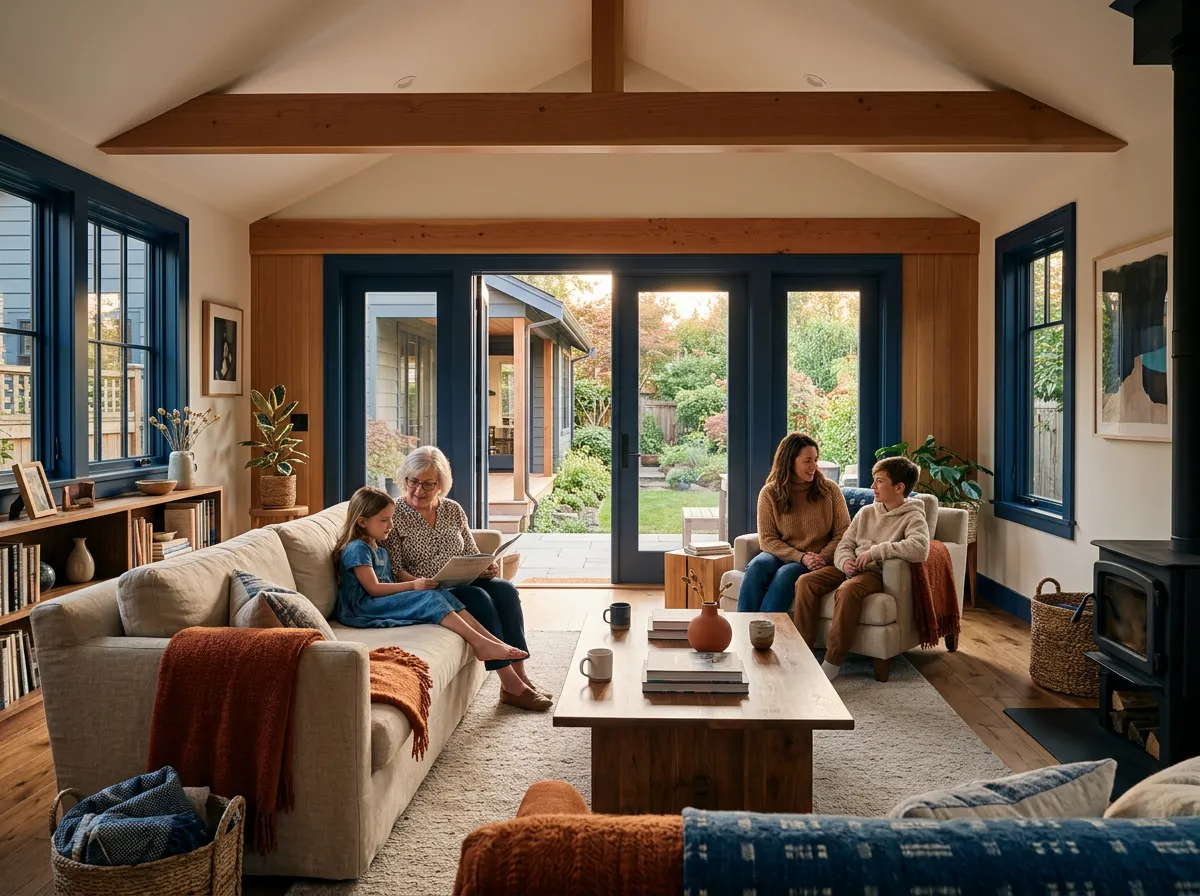
Retain familial proximity without sacrificing autonomous living. An ADU accommodates aging parents or adult children entering costly housing markets, providing private entries, tailored accessibility, and independent living quarters on the same property footprint.
- Complete autonomy with dedicated kitchens, baths, and private entries
- Eliminates rising assisted living or steep metropolitan rental expenses
- Long-term adaptable floor plans suitable for home offices or future care
INSTANT GIS PARCEL SCREENING
Check Your Lot's Eligibility
Cross-reference municipal zoning maps, minimum lot thresholds, and setback constraints across 482 California jurisdictions in under 60 seconds.
Projected Parcel Equity Model
SB 9 bypasses discretionary public hearings, converting single-family residential parcels into multi-unit assets. See average unlocked yield per verified qualifying parcel:
- Ministerial approval path guarantees no CEQA environmental review delays
- Allows dual-unit construction or lot split into two separate deeds
- Preserves owner tax exemptions under standard residential classifications
FREE PARCEL FEASIBILITY AUDIT
Run Your SB 9 Address Search
Enter your California property address to verify local setback compliance, maximum building footprints, and split boundaries instantly.
100% Confidential. Verified against 482 California municipal GIS maps. No spam guarantee.
CALIFORNIA STATUTE & MUNICIPAL CODE
Technical Details &
Zoning Policy
Senate Bill 9 establishes statewide ministerial approval for urban lot splits and duplex additions. While state law preempts subjective municipal hearings, executing a compliant project requires navigating precise objective standards, setback minimums, and infrastructure covenants.
Statutory Preemption Guarantee
Under Gov. Code § 65852.21 and § 66411.7, qualified parcel divisions and two-unit developments are exempt from discretionary city council review and CEQA environmental challenges.
What are the exact owner-occupancy affidavit rules under SB 9?
For an urban lot split under Gov. Code § 66411.7, the applicant must sign an affidavit attesting they intend to occupy one of the created housing units as their principal residence for at least three years from the approval date. Crucially, this owner-occupancy mandate applies only to lot splits, not to standard two-unit developments on an unsplit parcel, and community land trusts or qualified non-profits are legally exempt.
Can the city force off-street parking requirements on my split parcel?
No off-street parking may be mandated if the parcel is located within one-half mile walking distance of a high-quality transit corridor, major transit stop, or within one block of a designated car-share vehicle. In all other circumstances, local agencies can require at most one off-street parking space per unit, which may be provided as tandem or uncovered parking.
How are separate utility connections, laterals, and metering handled?
Each newly created parcel requires independent utility easements and service connections. While local utility purveyors require dedicated water meters and sewer laterals for newly subdivided lots, SB 9 explicitly prohibits cities from imposing off-site infrastructure upgrades or dedication requirements that physically prevent the construction of two 800 sq. ft. units.
What objective zoning standards and setback limits are cities allowed to enforce?
Municipalities may only apply objective design standards that do not conflict with state law. Specifically, local jurisdictions cannot enforce side or rear setbacks greater than 4 feet for new units, nor can setback standards be imposed on existing permitted structures converted or reconstructed in the same location and footprint.
Do private HOA covenants or deed restrictions supersede SB 9 rights?
State law overrides conflicting municipal zoning ordinances, but it does not automatically invalidate pre-existing private contractual deed restrictions or active HOA CC&Rs. We conduct a preliminary title review to verify that no private covenant restricts multi-unit configurations prior to filing civil engineering plans.
Editorial-grade civic and zoning intelligence for California residential property owners evaluating SB 9 urban lot splits and accessory dwelling unit configurations.
Regulatory & Policy Compliance Notice
California Senate Bill 9 (California Government Code §§ 65852.21 and 66411.7) establishes ministerial parcel split and two-unit development provisions subject to strict municipal constraints. Eligibility assessments provided by LotLogic are for informational and feasibility screening purposes only and do not constitute legal, survey, or architectural certification.
Local objective design standards, fire hazard severity zones (VHFHSZ), prime agricultural soil restrictions, historic district covenants, coastal zone overlays, and dedicated utility easements supersede generalized statutory allowances. Property owners must verify physical lot configurations with certified civil engineers and municipal planning departments before financial commitments.


© 2026 LotLogic. All rights reserved. California SB 9 Lot Split & ADU Planning Framework.